In statistics, a mixture model is a probabilistic model for representing the presence of subpopulations within an overall population, without requiring that an observed data set should identify the sub-population to which an individual observation belongs. Formally a mixture model corresponds to the mixture distribution that represents the probability distribution of observations in the overall population. However, while problems associated with "mixture distributions" relate to deriving the properties of the overall population from those of the sub-populations, "mixture models" are used to make statistical inferences about the properties of the sub-populations given only observations on the pooled population, without sub-population identity information. Mixture models are used for clustering, under the name model-based clustering, and also for density estimation. Mixture models should not be confused with models for compositional data, i.e., data whose components are constrained to sum to a constant value (1, 100%, etc.). However, compositional models can be thought of as mixture models, where members of the population are sampled at random. Conversely, mixture models can be thought of as compositional models, where the total size reading population has been normalized to 1. == Structure == === General mixture model === A typical finite-dimensional mixture model is a hierarchical model consisting of the following components: N random variables that are observed, each distributed according to a mixture of K components, with the components belonging to the same parametric family of distributions (e.g., all normal, all Zipfian, etc.) but with different parameters. However, it is also possible to have a finite mixture model where each component belongs to a different parametric family of distributions, for example, a mixture of a multivariate normal distribution and a generalized hyperbolic distribution. N random latent variables specifying the identity of the mixture component of each observation, each distributed according to a K-dimensional categorical distribution A set of K mixture weights, which are probabilities that sum to 1. A set of K parameters, each specifying the parameter of the corresponding mixture component. In many cases, each "parameter" is actually a set of parameters. For example, if the mixture components are Gaussian distributions, there will be a mean and variance for each component. If the mixture components are categorical distributions (e.g., when each observation is a token from a finite alphabet of size V), there will be a vector of V probabilities summing to 1. In addition, in a Bayesian setting, the mixture weights and parameters will themselves be random variables, and prior distributions will be placed over the variables. In such a case, the weights are typically viewed as a K-dimensional random vector drawn from a Dirichlet distribution (the conjugate prior of the categorical distribution), and the parameters will be distributed according to their respective conjugate priors. Mathematically, a basic parametric mixture model can be described as follows: K = number of mixture components N = number of observations θ i = 1 … K = parameter of distribution of observation associated with component i ϕ i = 1 … K = mixture weight, i.e., prior probability of a particular component i ϕ = K -dimensional vector composed of all the individual ϕ 1 … K ; must sum to 1 z i = 1 … N = component of observation i x i = 1 … N = observation i F ( x | θ ) = probability distribution of an observation, parametrized on θ z i = 1 … N ∼ Categorical ( ϕ ) x i = 1 … N | z i = 1 … N ∼ F ( θ z i ) {\displaystyle {\begin{array}{lcl}K&=&{\text{number of mixture components}}\\N&=&{\text{number of observations}}\\\theta _{i=1\dots K}&=&{\text{parameter of distribution of observation associated with component }}i\\\phi _{i=1\dots K}&=&{\text{mixture weight, i.e., prior probability of a particular component }}i\\{\boldsymbol {\phi }}&=&K{\text{-dimensional vector composed of all the individual }}\phi _{1\dots K}{\text{; must sum to 1}}\\z_{i=1\dots N}&=&{\text{component of observation }}i\\x_{i=1\dots N}&=&{\text{observation }}i\\F(x|\theta )&=&{\text{probability distribution of an observation, parametrized on }}\theta \\z_{i=1\dots N}&\sim &\operatorname {Categorical} ({\boldsymbol {\phi }})\\x_{i=1\dots N}|z_{i=1\dots N}&\sim &F(\theta _{z_{i}})\end{array}}} In a Bayesian setting, all parameters are associated with random variables, as follows: K , N = as above θ i = 1 … K , ϕ i = 1 … K , ϕ = as above z i = 1 … N , x i = 1 … N , F ( x | θ ) = as above α = shared hyperparameter for component parameters β = shared hyperparameter for mixture weights H ( θ | α ) = prior probability distribution of component parameters, parametrized on α θ i = 1 … K ∼ H ( θ | α ) ϕ ∼ S y m m e t r i c - D i r i c h l e t K ( β ) z i = 1 … N | ϕ ∼ Categorical ( ϕ ) x i = 1 … N | z i = 1 … N , θ i = 1 … K ∼ F ( θ z i ) {\displaystyle {\begin{array}{lcl}K,N&=&{\text{as above}}\\\theta _{i=1\dots K},\phi _{i=1\dots K},{\boldsymbol {\phi }}&=&{\text{as above}}\\z_{i=1\dots N},x_{i=1\dots N},F(x|\theta )&=&{\text{as above}}\\\alpha &=&{\text{shared hyperparameter for component parameters}}\\\beta &=&{\text{shared hyperparameter for mixture weights}}\\H(\theta |\alpha )&=&{\text{prior probability distribution of component parameters, parametrized on }}\alpha \\\theta _{i=1\dots K}&\sim &H(\theta |\alpha )\\{\boldsymbol {\phi }}&\sim &\operatorname {Symmetric-Dirichlet} _{K}(\beta )\\z_{i=1\dots N}|{\boldsymbol {\phi }}&\sim &\operatorname {Categorical} ({\boldsymbol {\phi }})\\x_{i=1\dots N}|z_{i=1\dots N},\theta _{i=1\dots K}&\sim &F(\theta _{z_{i}})\end{array}}} This characterization uses F and H to describe arbitrary distributions over observations and parameters, respectively. Typically H will be the conjugate prior of F. The two most common choices of F are Gaussian aka "normal" (for real-valued observations) and categorical (for discrete observations). Other common possibilities for the distribution of the mixture components are: Binomial distribution, for the number of "positive occurrences" (e.g., successes, yes votes, etc.) given a fixed number of total occurrences Multinomial distribution, similar to the binomial distribution, but for counts of multi-way occurrences (e.g., yes/no/maybe in a survey) Negative binomial distribution, for binomial-type observations but where the quantity of interest is the number of failures before a given number of successes occurs Poisson distribution, for the number of occurrences of an event in a given period of time, for an event that is characterized by a fixed rate of occurrence Exponential distribution, for the time before the next event occurs, for an event that is characterized by a fixed rate of occurrence Log-normal distribution, for positive real numbers that are assumed to grow exponentially, such as incomes or prices Multivariate normal distribution (aka multivariate Gaussian distribution), for vectors of correlated outcomes that are individually Gaussian-distributed Multivariate Student's t-distribution, for vectors of heavy-tailed correlated outcomes A vector of Bernoulli-distributed values, corresponding, e.g., to a black-and-white image, with each value representing a pixel; see the handwriting-recognition example below === Specific examples === ==== Gaussian mixture model ==== A typical non-Bayesian Gaussian mixture model looks like this: K , N = as above ϕ i = 1 … K , ϕ = as above z i = 1 … N , x i = 1 … N = as above θ i = 1 … K = { μ i = 1 … K , σ i = 1 … K 2 } μ i = 1 … K = mean of component i σ i = 1 … K 2 = variance of component i z i = 1 … N ∼ Categorical ( ϕ ) x i = 1 … N ∼ N ( μ z i , σ z i 2 ) {\displaystyle {\begin{array}{lcl}K,N&=&{\text{as above}}\\\phi _{i=1\dots K},{\boldsymbol {\phi }}&=&{\text{as above}}\\z_{i=1\dots N},x_{i=1\dots N}&=&{\text{as above}}\\\theta _{i=1\dots K}&=&\{\mu _{i=1\dots K},\sigma _{i=1\dots K}^{2}\}\\\mu _{i=1\dots K}&=&{\text{mean of component }}i\\\sigma _{i=1\dots K}^{2}&=&{\text{variance of component }}i\\z_{i=1\dots N}&\sim &\operatorname {Categorical} ({\boldsymbol {\phi }})\\x_{i=1\dots N}&\sim &{\mathcal {N}}(\mu _{z_{i}},\sigma _{z_{i}}^{2})\end{array}}} A Bayesian version of a Gaussian mixture model is as follows: K , N = as above ϕ i = 1 … K , ϕ = as above z i = 1 … N , x i = 1 … N = as above θ i = 1 … K = { μ i = 1 … K , σ i = 1 … K 2 } μ i = 1 … K = mean of component i σ i = 1 … K 2 = variance of component i μ 0 , λ , ν , σ 0 2 = shared hyperparameters μ i = 1 … K ∼ N ( μ 0 , λ σ i 2 ) σ i = 1 … K 2 ∼ I n v e r s e - G a m m a ( ν , σ 0 2 ) ϕ ∼ S y m m e t r i c - D i r i c h l e t K ( β ) z i = 1 … N ∼ Categorical ( ϕ ) x i = 1 … N ∼ N ( μ z i , σ z i 2 ) {\displaystyle {\begin{array}{lcl}K,N&=&{\text{as above}}\\\phi _{i=1\dots K},{\boldsymbol {\phi }}&=&{\text{as above}}\\z_{i=1\dots N},x_{i=1\dots N}&=&{\text{as above}}\\\theta _{i=1\
CPanel
cPanel is a web hosting control panel software developed by cPanel, L.L.C. It provides a graphical interface (GUI) and automation tools designed to simplify the process of hosting a web site for the website owner or "end user". It enables administration through a standard web browser using a three-tier structure. While cPanel is limited to managing a single hosting account, cPanel & WHM allow the administration of the entire server. In addition to the GUI, cPanel also has command line and API-based access that allows third-party software vendors, web hosting organizations, and developers to automate standard system administration processes. cPanel & WHM is designed to function either as a dedicated server or virtual private server. The latest cPanel & WHM version supports installation on AlmaLinux, Rocky Linux, CloudLinux OS, and Ubuntu. == History == cPanel is currently developed by cPanel, L.L.C., a privately owned company headquartered in Houston, Texas, United States. WebPros is the parent company of cPanel, L.L.C. It was originally designed in 1996 as the control panel for Speed Hosting, a now-defunct web hosting company. The original author of cPanel, J. Nick Koston, had a stake in Speed Hosting. Webking quickly began using cPanel after its merger with Speed Hosting. The new company moved its servers to Virtual Development Inc. (VDI), a now-defunct hosting facility. Following an agreement between Koston and VDI, cPanel was only available to customers hosted directly at VDI. At the time, there was little competition in the control panel market, with the main choices being VDI and Alabanza. Eventually, due to Koston leaving for college, he and William Jensen signed an agreement in which cPanel was split into a separate program called WebPanel; this version was run by VDI. Without the lead programmer, VDI was not able to continue any work on cPanel and eventually stopped supporting it completely. Koston kept working on cPanel while also working at BurstNET. Eventually, he left BurstNET to focus fully on cPanel. cPanel 3 was released in 1999: main additions over cPanel 2 were an automatic upgrade and the Web Host Manager (WHM). The interface was also improved when Carlos Rego of WizardsHosting made what became the default theme of cPanel. With the release of cPanel 11, cPanel adopted a four-tier versioning system, "Parent.Major.Minor.Patch" (e.g., 11.32.0.3). As of version 11.52, the "Parent" representation is deprecated, with 11.54 stylized as "Version 54." cPanel 11.30 is the last major version to support FreeBSD. On August 20, 2018 cPanel L.L.C. announced that it had signed an agreement to be acquired by a group led by Oakley Capital (who also own Plesk and SolusVM). While Koston sold his interest in cPanel, he will continue to be an owner of the company that owns cPanel. In April 2026, a severe vulnerability was discovered that affected all cPanel and WHM versions after 11.40, affectively allowing unauthenticated remote attackers to access the control panel. According to some web hosters the vulnerability was already being actively exploited, with some attempts even dating back to late February 2026. == Add-ons == cPanel provides front-ends for a number of common operations, including the management of PGP keys, crontab tasks, mail and FTP accounts, and mailing lists. Several add-ons exist, some for an additional fee, including auto installers such as Installatron, Fantastico, Softaculous, and WHMSonic (SHOUTcast/radio Control Panel Add-on). The add-ons need to be enabled by the server administrator in WHM to be accessible to the cPanel user. WHM manages some software packages separately from the underlying operating system, applying upgrades to Apache, PHP, MySQL and MariaDB, Exim, FTP, and related software packages automatically. This ensures that these packages are kept up-to-date and compatible with WHM, but makes it more difficult to install newer versions of these packages. It also makes it difficult to verify that the packages have not been tampered with, since the operating system's package management verification system cannot be used to do so. == WHM == WHM, short for WebHost Manager, is a web-based tool which is used for server administration. There are at least two tiers of WHM, often referred to as "root WHM", and non-root WHM (or Reseller WHM). Root WHM is used by server administrators and non-root WHM (with fewer privileges) is used by others, like entity departments, and resellers to manage hosting accounts often referred to as cPanel accounts on a web server. WHM is also used to manage SSL certificates (both server self generated and CA provided SSL certificates), cPanel users, hosting packages, DNS zones, themes, and authentication methods. The default automatic SSL (AutoSSL) provided by cPanel is powered by Let's Encrypt. Additionally, WHM can also be used to manage FTP, Mail (POP, IMAP, and SMTP) and SSH services on the server. As well as being accessible by the root administrator, WHM is also accessible to users with reseller privileges. Reseller users of cPanel have a smaller set of features than the root user, generally limited by the server administrator, to features which they determine will affect their customers' accounts rather than the server as a whole. From root WHM, the server administrator can perform maintenance operations such as upgrading and recompiling Apache and PHP, installing Perl modules, and upgrading RPMs installed on the system. == Enkompass == A version of cPanel & WHM for Microsoft Windows, called Enkompass, was declared end-of-life as of February 2014. Version 3 remained available for download, but without further development or support. In the preceding years, Enkompass had been available for free as product development slowed. == Pricing == On June 27, 2019 cPanel announced a new account-based pricing structure. After backlash from their customers, cPanel issued a second announcement but did not change the new structure.
Secure environment
In computing, a secure environment is any system which implements the controlled storage and use of information. In the event of computing data loss, a secure environment is used to protect personal or confidential data. It may also be known as a trusted execution environment (TEE). Often, secure environments employ cryptography as a means to protect information. This is typically used for processing confidential or restricted information. Some secure environments employ cryptographic hashing, simply to verify that the information has not been altered since it was last modified.
T-vertices
T-vertices is a term used in computer graphics to describe a problem that can occur during mesh refinement or mesh simplification. The most common case occurs in naive implementations of continuous level of detail, where a finer-level mesh is "sewn" together with a coarser-level mesh by simply aligning the finer vertices on the edges of the coarse polygons. The result is a continuous mesh, however due to the nature of the z-buffer and certain lighting algorithms such as Gouraud shading, visual artifacts can often be detected. Some modeling algorithms such as subdivision surfaces will fail when a model contains T-vertices.
Terminology model
A terminology model is a refinement of a concept system. Within a terminology model the concepts (object types) of a specific problem or subject area are defined by subject-matter experts in terms of concept (object type) definitions and definitions of subordinated concepts or characteristics (properties). Besides object types, the terminology model allows defining hierarchical classifications, definitions for object type and property behavior and definition of casual relations. The terminology model is a means for subject-matter experts to express their knowledge about the subject in subject-specific terms. Since the terminology model is structured rather similar to an object-oriented database schema, is can be transformed without loss of information into an object-oriented database schema. Thus, the terminology model is a method for problem analysis on the one side and a mean of defining database schema on the other side. Several terminology models have been developed and published in the field of statistics: Terminology model for classifications Terminology model for statistical variables Reference model for statistical metadata
Figure AI
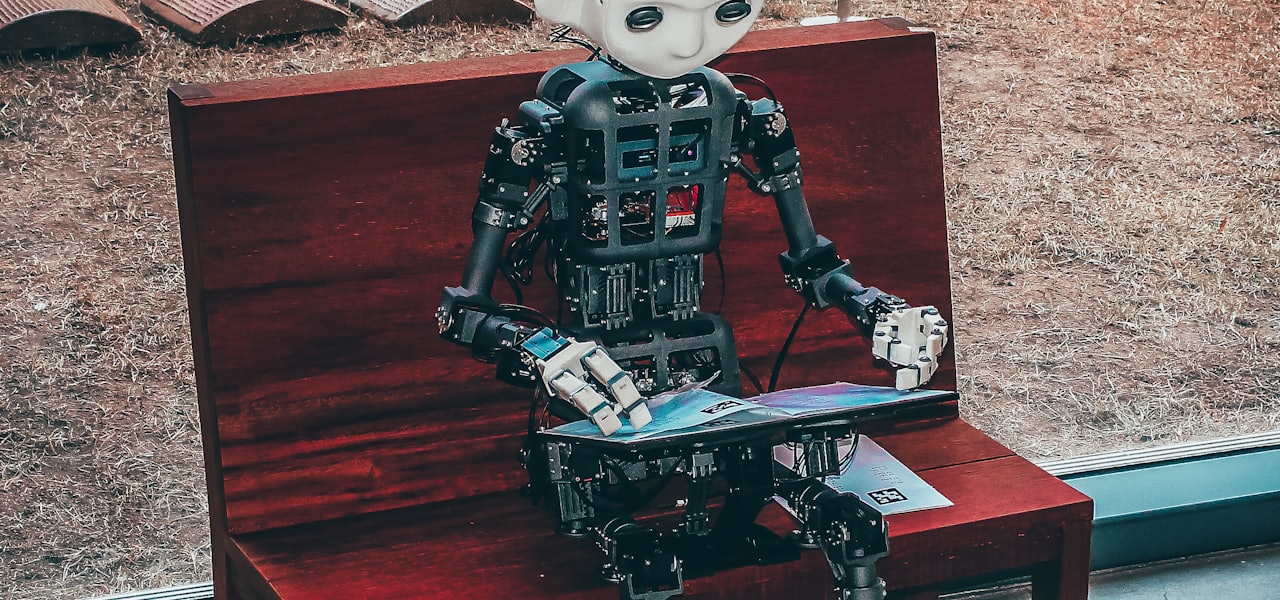
Figure AI, Inc. is an American robotics company developing humanoid robots that operate via artificial intelligence. The company was founded in 2022 by Brett Adcock. As of late 2025, the company has a $39 billion valuation. Three generations of humanoid robots (Figure 01–03) have been developed, as well as two iterations of a vision-language-action model (Helix 01–02), which can control up to two robots at once. By 2026, the robots demonstrated the potential ability to perform household work and the company gained publicity when a Figure 03 appeared at a White House event. == History == Figure AI was founded in 2022 by Brett Adcock, also known for founding Archer Aviation and Vettery. That year, the company introduced its prototype, Figure 01, a bipedal robot designed for manual labor, initially targeting the logistics and warehousing sectors. The initial model utilized external cabling for easier maintenance. In May 2023, Figure AI raised $70 million from investors including Adcock, who invested $20 million, and Parkway Venture Capital. In January 2024, Figure AI announced a partnership with BMW to deploy humanoid robots in automotive manufacturing facilities. In February 2024, Figure AI secured $675 million in venture capital funding from a consortium that includes Jeff Bezos, Microsoft, Nvidia, Intel, and the startup-funding divisions of Amazon and OpenAI; the company was then valued at $2.6 billion. Figure AI also announced a partnership with OpenAI, which would build specialized artificial intelligence (AI) models for Figure AI's humanoid robots, enabling its robots to process language; the collaboration ended after a year, with Adcock stating that large language models had become a smaller problem compared to those allowing for "high rate robot control". In August 2024, the company introduced Figure 02, describing it as the next step toward deploying humanoids for industrial use. The machine has 35 degrees of freedom (DOF), while the five-fingered hands have 16 DOF and the ability to carry up to 25 kilograms (55 lb). The model is equipped with cabling integrated into the limbs, a torso-placed battery, six RGB cameras, and an onboard vision-language-action (VLA) model. It has three times the computing power (including inference AI) of the previous model, including two graphics processing units, supported by Nvidia. Microphones, speakers, and custom AI models (developed with OpenAI) enable communication with humans. In early 2025, Figure AI announced BotQ, a manufacturing facility aiming to produce 12,000 humanoids per year with the help of its own humanoid robots, and Helix, a VLA model that can control up to two robots at once. Helix enables a robot to interact with the world without extensive manual training, according to the company allowing it to pick up nearly any small household object. By April, the company issued cease-and-desist letters to at least two secondary brokers promoting its private stock without authorization. In September, a third round of financing exceeded $1 billion, raising the company's total valuation to $39 billion. Investors included Brookfield Asset Management, Intel, Macquarie Capital, Nvidia, Parkway Venture Capital, Qualcomm, Salesforce, and T-Mobile. In October 2025, Figure 03 was introduced. According to the company, its hardware and software redesign aims to create a general-purpose robot able to learn directly from humans. An upgraded camera system delivers twice the frame rate, a quarter the latency, and a 60% wider field of view, in addition to a camera in each hand. Tactile sensors in the fingertips can detect forces as little as 3 grams (0.1 oz). It incorporates soft materials and a protected battery for safety, and removable, washable textiles. It supports wireless inductive charging. In November 2025, the former head of product safety sued the company on the basis of being fired for raising the concern that the company's robots were strong enough to fracture a human skull. By early 2026, Figure 02 had been used in demonstrations showing that it could load a washing machine, sort packages, and fold laundry. That January, Helix 02 was released, expanding the AI model to the entire body to allow for functional autonomy. A Helix 02–powered Figure 02 was shown to be capable of loading and unloading a dishwasher, based on hours of motion-capture data and simulation-based machine learning. In March, U.S. First Lady Melania Trump appeared at the White House with a Figure 03, promoting the presumptive eventual ability of AI to teach children. In May 2026, Figure AI livestreamed a group of their robots processing packages nonstop for almost a week, inspiring a 10-hour competition between their robot and a human, in which the robot performed 98.5% as well as the human.
Ibotta
Ibotta, Inc. is an American mobile technology company headquartered in Denver, Colorado. Founded in 2011, the company offers cash back rewards on various purchases through its Ibotta Performance Network and direct to consumer app. Ibotta partners with CPG (consumer packaged goods) brands and network publishers to provide these rewards. As of 2024, the company operates solely in the United States. The company's rewards-as-a-service offering, the Ibotta Performance Network, went live in 2022. In August 2019, Ibotta received a $1 billion valuation after its Series D funding, and in 2023, the company surpassed $1.5 billion cash rewards paid to over 50 million consumers since the company's founding. Ibotta became a publicly traded company in April 2024 with a listing on the New York Stock Exchange. As of September 2025, Ibotta is trading at approximately $27.13 per share, marking a 69% decline from its initial public offering price of $88 per share on April 18, 2024. == History == === Founding through early 2019 === Ibotta was founded by current CEO Bryan Leach. The company was incorporated in 2011 and the app launched to both the App Store and Google Play stores in 2012. Early investors included entrepreneur and computer scientist Jim Clark and Tom “TJ” Jermoluk, Chairman of @Home Network. In 2015, Ibotta expanded beyond item level grocery, adding the ability to get cash back on in-store retail purchases. In 2016, in-app mobile commerce began, allowing users to navigate from the Ibotta app to its partners' apps to earn cash back on purchases. In 2016 with a Series C investment, Ibotta had raised over $73 million in funding. In March of that year, Ibotta partnered with Anheuser-Busch to offer cash back for adults who purchased its products. In May, the company partnered with LiveRamp so that companies could use their CRM data to create segmented, personalized campaigns. At the time, the company had around 200 full- and part-time employees and moved from offices in Lower Downtown Denver (LoDo) to a 40,000-square-foot office in the central Denver business district. A year later, the company had to expand to a second floor as it added almost another 100 employees. In 2017, Ibotta added cash back for Uber to its app as well as cash back rewards for online and mobile purchases. In 2018, Ibotta was listed on the Inc. 5,000 list as one of the fastest growing private companies in the U.S. A year later, in January 2019, the Ibotta app had been downloaded more than 30 million times with users receiving a reported $500 million in cash back rewards. That year, Ibotta was the largest mobile company in Colorado with six million monthly active users. === August 2019 to present === In August 2019, Ibotta was valued at $1 billion, following a Series D round of funding. The round was led by Koch Disruptive Technologies, a subsidiary of Koch Industries. 2019 was also the year the company introduced Pay with Ibotta, which allowed users to complete purchases at key retailers on the Ibotta app and earn instant cash back in the process. With that new service, users were able to enter their purchase total and use a QR code to checkout and receive immediate cash back. In 2020, the company partnered with Trees for the Future to plant up to 1 million trees as part of an Earth Month campaign to raise awareness about the waste of unused paper coupons. In response to the COVID-19 pandemic, Ibotta partnered with CPG brands in their “Here to Help” campaign and together committed over $10 million in cash back to American consumers. The company added the ability to earn cash back from online grocery pick-up and delivery orders. Later that year, Ibotta started its free Thanksgiving program, providing users with 100% cash back on select groceries needed for a Thanksgiving meal. By 2022, the company had provided approximately 10 million Thanksgiving meals. In 2021, Ibotta acquired the company OctoShop (originally InStok), a shopping browser extension company. The OctoShop app enables users to compare prices across stores and set restock and price-drop alerts. In April 2022, the Ibotta Performance Network (IPN) was launched. The IPN allows brands to deliver digital offers to consumers through third party publishers. Retailers including Walmart, Dollar General and Family Dollar, food delivery services including Instacart, and convenience stores including Shell are all part of the Ibotta Performance Network. This pay-per-sales or success-based performance network reaches over 200 million consumers. On April 18, 2024, Ibotta had its initial public offering (IPO), trading on the New York Stock Exchange (NYSE) under the ticker symbol IBTA. It was the largest technology IPO in Colorado history. In October 2025, Ibotta announced a partnership with technology and analytics company Circana, integrating Circana's Household Lift measurement into Ibotta campaigns to give CPG brands an increased understanding of the impact of their promotional campaigns. On November 3, 2025, Ibotta launched LiveLift, a tool for companies to measure the return on investment of digital promotions, in order to optimize performance marketing goals. === Athletic partnerships === Ibotta became the official jersey patch partner of the New Orleans Pelicans, a professional men's basketball team in the National Basketball Association (NBA), for the 2020–2021 and 2023–2024 seasons. Ibotta became the official jersey patch partner of the 2023 NBA champion Denver Nuggets baskeetball team beginning in the 2023–2024 season. In March 2023, F1 driver Logan Sargeant, the first U.S. racer to compete in F1 since 2015, partnered with Ibotta. The Ibotta logo was displayed on Sargeant's racing helmet throughout his F1 career. In June 2023, UConn Huskies women's basketball player Paige Bueckers entered into a "name, image, and likeness" (NIL) promotional agreement with Ibotta. According to a press release by Ibotta, the company has agreements with The Brandr Group, which finds NIL opportunities for women college athletes, and the Pearpop social media marketing platform to promote Ibotta. == Legal issues == In April 2025, shareholders filed a class action lawsuit—Fortune v. Ibotta, Inc., in the U.S. District Court for the District of Colorado (Case No. 25-cv-01213)—alleging that the registration statement in connection with Ibotta’s April 2024 initial public offering omitted material information. The complaint claims that, although Ibotta disclosed detailed terms for its contract with Walmart Inc., it failed to warn investors that its agreement with The Kroger Co., its second-largest client, was terminable at will and thus could be canceled without warning, creating a misleading impression of stability.